What custom software costs in Christchurch
Real NZD pricing bands for custom software development in Christchurch in 2026. What drives the cost, what to ask for, and why vague pricing is a red flag.

If you've rung around three Christchurch developers about a custom build and got three versions of "it depends, let's book a discovery call", you're not imagining it. That's the standard answer in this industry. It's also the reason most owners walk away more confused than when they started.
Cost in software isn't a mystery. It's a maths problem with a few well-known variables. So let's just put the numbers down.
The four real bands
Most custom software projects in Christchurch in 2026 land in one of four price ranges. The bands aren't precise to the dollar, but they're tight enough to plan around.
Simple business tool: NZD $15,000 to $30,000. A focused internal app: a quoting tool, a job-tracking dashboard, a calculator that replaces a fragile spreadsheet. One or two user types. Maybe one integration. Four to eight weeks of work.
Medium custom build: NZD $30,000 to $75,000. A real product or core operational system. Several user roles, a handful of integrations (Xero, an email provider, a payment gateway), proper authentication, dashboards, reporting. Two to four months of work depending on complexity.
SaaS MVP: NZD $45,000 and up. A multi-tenant product you intend to sell. The architecture cost is real even if the v1 feature list is modest, because you're building something that has to scale, bill, and isolate customer data from day one.
Large custom system: NZD $75,000 and up, often well above. Enterprise workflows, deep integrations into ERPs or warehouse systems, regulatory requirements, multiple user types, audit trails. These projects usually phase across six to twelve months.
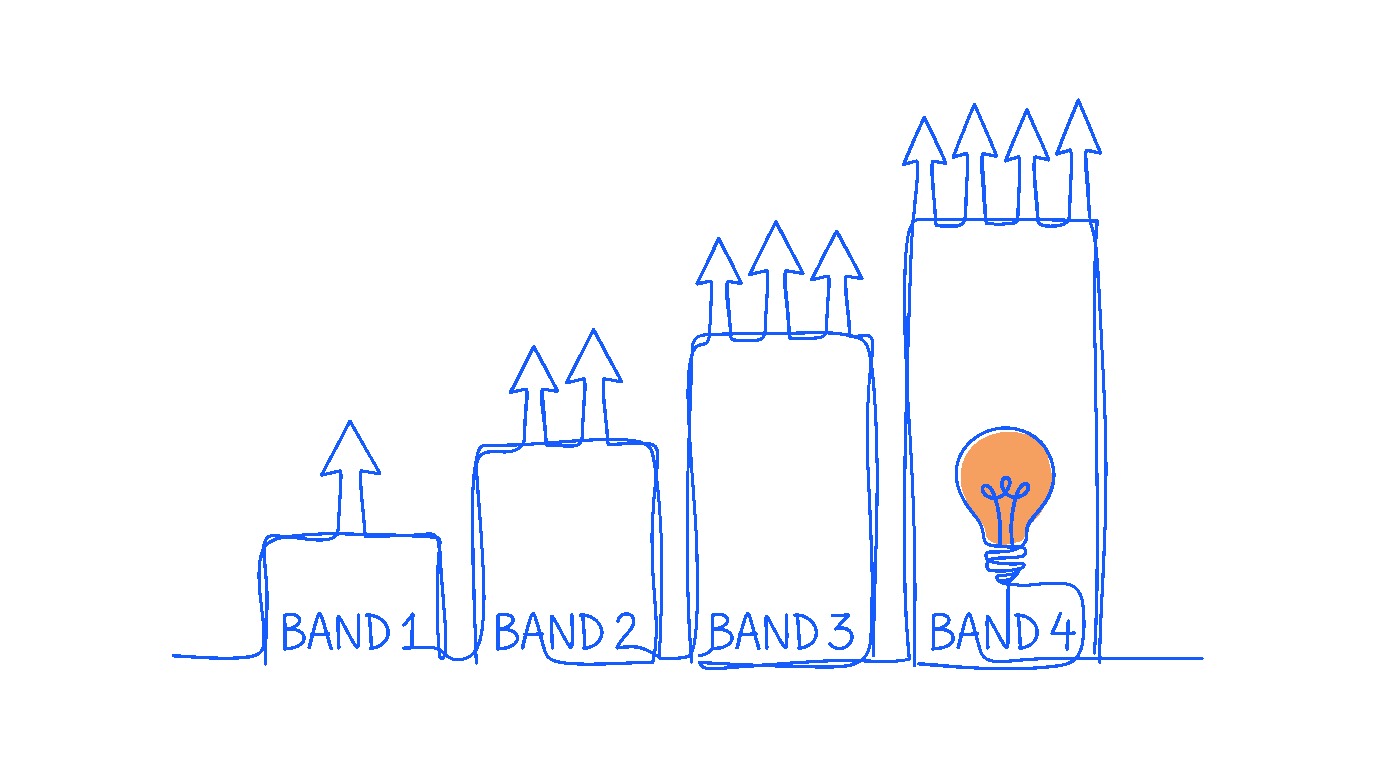
These aren't aspirational numbers. They're what we quote in Christchurch right now and what other competent NZ teams quote too. They reflect real cost-to-build at current NZ developer market rates, where Seek puts the average software engineer salary between NZD $100k and $120k per year and contract rates land between $100 and $180 an hour. If a quote comes in dramatically below a band, something's been left out of scope. If it comes in dramatically above, you're paying for overhead that has nothing to do with your build.
What actually moves the price
Three things move the price meaningfully: scope, complexity, and integrations.
Scope is how much of the problem the software solves. A tool that handles quoting is cheaper than one that handles quoting plus invoicing plus reporting plus a customer portal. Owners often discover scope is bigger than they thought during the first week of work, which is exactly why the discovery phase isn't fluff — it's the cheapest place to find that out.
Complexity is how hard each piece is to build correctly. A login screen is easy. A login screen with single-sign-on against a client's Active Directory and audit logging is not.
Integrations are where projects quietly get expensive. Every external system the software touches (Xero, MYOB, Shopify, an in-house ERP, a third-party API with bad documentation) adds time. Not because the integration itself is hard, but because you're now maintaining a relationship with someone else's release schedule.
Things that don't move the price as much as people think: where the developer's office is, how many staff they've got, whether they call themselves an agency or a studio. Our team's based out of Rangiora, supports Christchurch, and has people across NZ and offshore. The Sydney agency quoting you double for the same scope isn't paying double in talent. They're paying higher AU wages, higher rent, and higher overheads — same engineers, different cost base.
Vague pricing is a red flag
This is the part of the article we've got an opinion on. State it plainly: if a developer can't give you a real ballpark range before you've signed anything, walk away.
There's a tradition in this industry of refusing to commit to numbers. The justification is usually that the scope isn't defined yet, so a quote would be misleading. That's true at the precise-dollar level. It's not true at the band level. Anyone who's built ten of these things knows whether your project is a $20k thing or a $150k thing within twenty minutes of hearing about it. If they won't say so, that means one of two things: they don't actually know, or they don't want you to compare them.
Both are reasons to look elsewhere.
The other version of this red flag is the proposal that arrives the next morning at a single round-number price with no breakdown. A trustworthy quote shows you the assumptions: what's included, what's excluded, how many hours of which roles, what the milestones look like, and what happens when something changes. We call this no surprise invoices. It's the difference between a budget you can defend to your accountant and a number you have to hope is right.
The hidden costs nobody mentions in month one
The build cost is the visible part. The full cost of owning custom software runs about double over five years.
Industry research lines up here pretty consistently. Gartner estimates organisations spend 55 to 80 percent of their IT budgets on maintenance rather than new initiatives, and that annual ownership cost can run up to four times the original build over the software's life. Capterra's 2025 buyer research separately found 57 percent of business software buyers regret the purchase, and a third blame hidden expenses they didn't see coming.
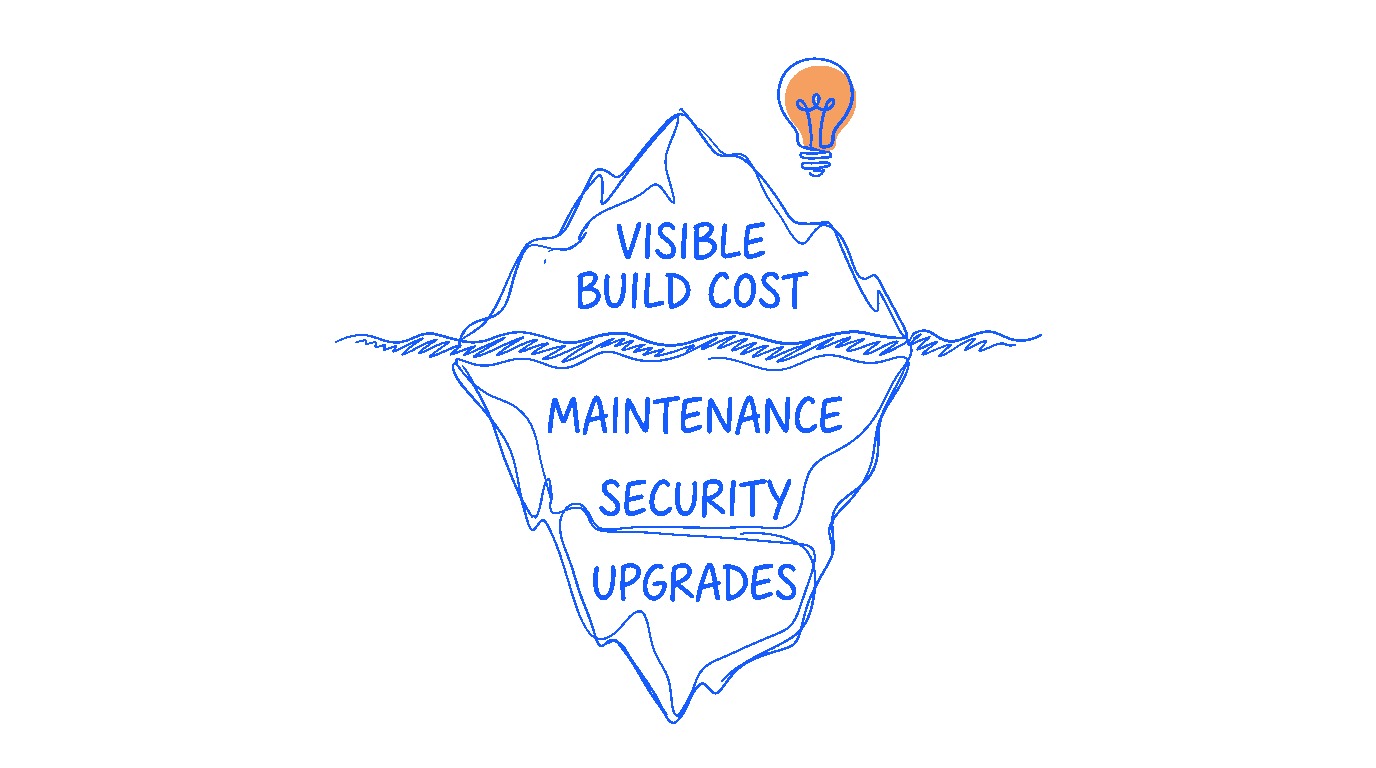
What's actually under the waterline:
Hosting and infrastructure. Usually small for a single-tenant business tool, around $30 to $200 a month. Larger for SaaS or anything with heavy data.
Security patching and dependency updates. Frameworks update. Libraries get vulnerabilities. Browsers change. A piece of software that ran fine in 2024 will throw warnings by 2026 if no one's been keeping up. Skipping this isn't saving money, it's deferring a much larger bill.
Framework upgrades. Roughly every two to three years your stack will have a major version that needs migrating to. Smaller for small apps. Real money for bigger ones.
Integration drift. Every API your software talks to will change at some point. Xero deprecates an endpoint. Shopify rolls a new version. Someone has to update your end.
Occasional bug fixes and small enhancements. Real software is never finished. Users will find edge cases. The business will change.
This is why most of our clients sit on a small monthly retainer, typically between $2,000 and $8,000 a month depending on the system, to cover patching, hosting, monitoring, and incremental improvements without surprise invoices. It's optional. Some projects don't warrant it. But pretending year two costs zero is the most common mistake we see in client budgets.
When off-the-shelf is the better call
Honest framing: a lot of the time, you don't need custom software. If Xero, Shopify, monday.com, or a vertical SaaS already does 80 percent of what you need, custom is usually the wrong answer. You'll spend $40k building what you could've subscribed to for $200 a month.
Custom only makes sense when one of three things is true: the off-the-shelf tools genuinely don't fit your workflow, the workflow is the competitive advantage and you don't want it locked inside someone else's product, or the per-seat pricing of off-the-shelf tools at your headcount has crossed the line where building beats renting.
If you're not sure which side of that line you're on, that's the conversation to have first — before anyone quotes you anything.

What a fixed-price quote should actually contain
A quote you can trust has, at minimum, the following: a statement of scope (what's in), a list of explicit exclusions (what's out), the assumptions the price depends on, the milestones with what gets delivered at each one, the hourly rate or day rate for any change requests, and what happens if scope changes mid-build.
Anything less than that and you're not buying software. You're buying a verbal agreement with a logo on it.